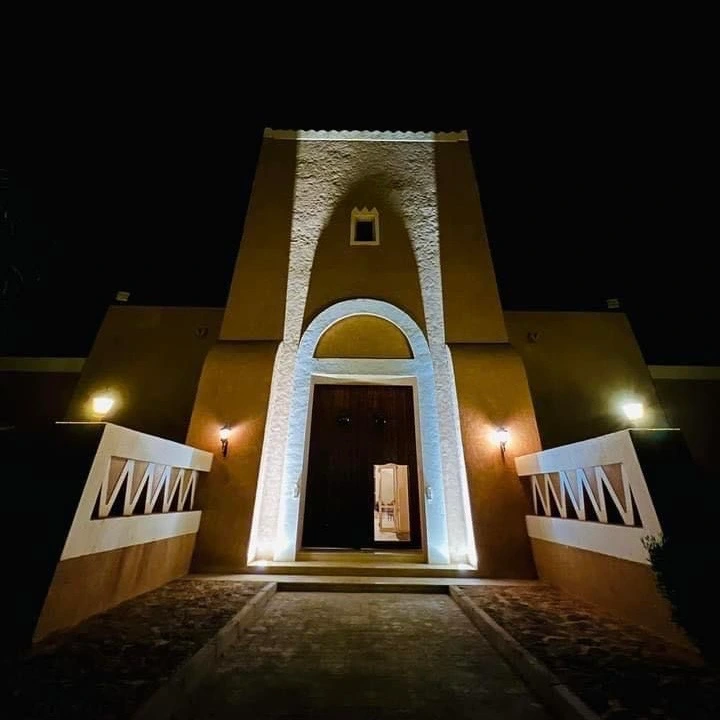
Excursions: Walking tour of modern Tripoli.
Highlights: Modern Tripoli and its vibrant streets, contemporary architecture and coastal atmosphere.
Meals: Lunch and dinner.
Schedule depending on time of arrival
Arrival in Tripoli, Libya, followed by a guided walking tour exploring the modern side of the capital. Discover Tripoli’s lively streets, contemporary architecture, new development areas, and the everyday atmosphere of this historic Mediterranean city.
The walking tour also takes you along the Tripoli coastline, offering views of the Mediterranean Sea and a different perspective of the city and its ongoing development.
After the tour, enjoy dinner at a local restaurant before transferring to your hotel for the night in Tripoli.

Excursions: Guided visit to Sabratha with a local Sabratha site guide.
Explore the Old City of Tripoli (UNESCO World Heritage Site).
Highlights: The spectacular Roman Theatre of Sabratha and the historic highlights of Tripoli Old City.
Meals: Breakfast, lunch and dinner.
Today, we continue to the UNESCO World Heritage Site of Sabratha, one of the most impressive ancient Roman archaeological sites in Libya. Originally founded as a Phoenician trading settlement in the 4th century BC, Sabratha later came under Greek influence before becoming part of the Roman world in the 1st century AD.
The highlight of the archaeological site is the magnificent Roman Theatre of Sabratha, one of the best-preserved ancient theatres in North Africa. Its monumental façade features 108 Corinthian columns, rising approximately 20 metres above the stage. Beneath the stage, visitors can see beautifully preserved marble reliefs depicting scenes and figures from classical mythology, including the Three Graces, the Judgement of Paris and the Nine Muses.
We continue our exploration of Sabratha’s ancient ruins, including the Punic Mausoleum of Bes, the Temple of Antoninus and other important Roman and Punic monuments scattered throughout the archaeological site.
After visiting Sabratha, we return to Tripoli and explore the highlights of the historic Old City of Tripoli, one of the most atmospheric medinas in North Africa.
After lunch at a traditional restaurant in the Old Town, we explore the maze of historic streets, narrow alleyways and bustling Tripoli souks, where different areas are traditionally dedicated to specific trades and crafts.
Our walking tour includes the historic Karamanli House, associated with the 18th-century Karamanli rulers; the 16th-century Dragut Mosque, traditionally associated with the famous Ottoman admiral Dragut; the 19th-century Gorgi Mosque; the former British Consulate; the former Turkish Prison, now used as a school; St. George’s Orthodox Church; and the historic Ottoman clock tower.
The final highlight is the Arch of Marcus Aurelius, a remarkable 2nd-century Roman monument and the only surviving major structure from ancient Roman Oea, the Roman city that once occupied the site of modern Tripoli.
This combination of Sabratha’s Roman ruins and Tripoli’s historic medina offers a fascinating journey through more than two millennia of Libya’s Phoenician, Roman, Ottoman and modern heritage.
Overnight in Tripoli.


Excursions: Qasr Al-Haj, Nalut and Ghadames.
Highlights: The historic Berber qasrs of Qasr Al-Haj and Nalut, showcasing the unique architectural and cultural heritage of the Jabal Nafusa region.
Meals: Breakfast, lunch and dinner.
Today, we leave Tripoli and travel into the heart of the Jabal Nafusa Mountains, a spectacular region of western Libya known for its dramatic landscapes and rich Berber heritage.
Our first stop is Qasr al-Haj, one of Libya’s most impressive historic Berber granaries. This remarkable circular qasr, or fortified granary, dates back to the 13th century and is an outstanding example of traditional Berber architecture. Its distinctive design and historical importance have made Qasr al-Haj one of the highlights of a Libya tour through the Jabal Nafusa.
The site also gained international recognition when British historian and television presenter Dan Cruickshank selected Qasr al-Haj as one of The World’s 80 Greatest Treasures.
We then continue to Nalut, an important centre of Berber culture and heritage in western Libya. From Nalut, our journey continues towards Ghadames, one of Libya’s most remarkable historic desert cities.
A UNESCO World Heritage Site, Ghadames is widely known as the “Jewel of the Sahara.” The ancient city is famous for its traditional mud-brick architecture, covered streets, distinctive houses and historic oasis, offering a fascinating insight into centuries of Saharan life and culture.
We will spend two nights in Ghadames, giving us time to explore this extraordinary desert city and experience its unique architectural and cultural heritage.
Overnight in Ghadames.


Excursions:
Guided tour of the Ghadames Old Town (UNESCO World Heritage Site) with a local Ghadames guide.
Short 4×4 desert excursion to Ras al-Ghoul, including a sunset experience among the desert landscapes.
Highlights:
Ghadames Old Town, traditional lunch in a local house, and the spectacular sand dunes of the Grand Erg.
Meals:
Breakfast, traditional lunch and dinner.
Ghadames, one of Libya’s most remarkable historic desert cities.
A UNESCO World Heritage Site, Ghadames is widely known as the “Jewel of the Sahara.” The ancient city is famous for its traditional mud-brick architecture, covered streets, distinctive houses and historic oasis, offering a fascinating insight into centuries of Saharan life and culture.
We will spend two nights in Ghadames, giving us time to explore this extraordinary desert city and experience its unique architectural and cultural heritage.
Later in the afternoon, we board 4×4 vehicles and travel into the desert to Ras al-Ghoul (Summit of the Ghost), where the remains of an ancient Roman fort stand amid the dramatic landscapes of southwestern Libya.
From Ras al-Ghoul, we continue towards the spectacular sand dunes of the Grand Erg Oriental, the vast Sahara region extending across Libya, Algeria and Tunisia. Here, we enjoy the changing colours of the desert as the sun sets over the dunes, creating an unforgettable Sahara sunset experience in Libya.
After sunset, we return to Ghadames, one of Libya’s most remarkable historic desert cities.
Overnight in Ghadames.


Excursions: Visit to Kabaw, Tormisa and Gharyan.
Highlights:
The historic Kabaw Qasr, the abandoned village of Tormisa with its dramatic cliff-top setting, and a traditional troglodyte house in Gharyan.
Meals: Breakfast, lunch and dinner.
Today, we leave Ghadames and travel back into the Jabal Nafusa Mountains, continuing our journey through the historic Berber heartland of western Libya.
Our first stop is Kabaw, where we visit another ancient Berber qasr, a traditional fortified granary reflecting the region’s distinctive architectural heritage. From Kabaw, we continue to the abandoned village of Tormisa, dramatically located on a rocky cliff and offering spectacular panoramic views across the surrounding Jabal Nafusa landscape.
We then drive to Gharyan, one of Libya’s best-known centres of traditional pottery. Here, we visit a troglodyte house, a traditional underground dwelling carved into the earth, before exploring the local pottery workshops and stalls for which Gharyan is famous.
The journey back to Tripoli provides a fascinating final look at the landscapes, architecture and cultural heritage of the Jabal Nafusa region.
Road mileage today: approximately 570 km.
Overnight in Tripoli.


Excursions: Guided visit to Leptis Magna (UNESCO World Heritage Site) with a local Leptis Magna site guide.
Highlights: The spectacular Leptis Magna Theatre and Amphitheatre, Hadrianic Baths, Imperial Forum and ancient Market.
Meals: Breakfast, lunch and dinner.
We take a full-day excursion today from Tripoli to Leptis Magna, the spectacular UNESCO World Heritage Site and one of the most important Roman archaeological sites in North Africa.
Founded by the Phoenicians and later developed under Roman rule, Leptis Magna reached its greatest prominence in the 2nd century AD under the Roman Emperor Septimius Severus, who was born in the city. During his reign, Leptis Magna was transformed into a magnificent Roman metropolis, with monumental public buildings, forums, baths, temples and marketplaces.
The city later declined and was eventually revived under the Byzantine Emperor Justinian in the 6th century AD, when Leptis Magna became part of the Byzantine Empire.
Today, the enormous archaeological site provides an extraordinary insight into the scale and grandeur of ancient Roman civilisation in Libya. During our visit, we explore some of the city’s most impressive monuments, including the Arch of Septimius Severus, the Hadrianic Baths, the Palaestra (Athletics Ground), the Nymphaeum, the vast Imperial Forum, the Basilica, and the Arches of Tiberius and Trajan.
One of the highlights is the ancient Roman Theatre of Leptis Magna, spectacularly positioned with views towards the Mediterranean Sea. We also visit the Sanctuary of the Divine Emperors and the ancient Market, famous for its distinctive stone kiosks, an innovative design in the Roman world.
With its monumental architecture, remarkably preserved ruins and Mediterranean setting, Leptis Magna is one of the essential highlights of any Libya tour and a unique destination for travellers interested in Roman history and archaeology.
After a full day exploring this extraordinary ancient city, we return to Tripoli.
Road mileage today: approximately 280 km.
Overnight in Tripoli.


Excursions: Visit the National Museum of Libya in Tripoli.
Guided exploration of Benghazi Old City.
Highlights: The National Museum of Libya and the historic Old City of Benghazi.
Meals: Breakfast, lunch and dinner
We begin the day at the National Museum of Libya in Tripoli, located within the historic Red Castle (Assaraya al-Hamra) overlooking Martyrs’ Square. The museum offers a fascinating journey through more than 10,000 years of Libyan history, from prehistoric times through the Greek and Roman periods to the Byzantine and Islamic eras.
Its extensive collection includes prehistoric artefacts, Greek and Roman sculptures, beautifully preserved Byzantine mosaics, Islamic treasures, traditional costumes and exhibits illustrating the diverse cultural heritage of Libya.
After the museum visit, we take a domestic flight from Tripoli to Benghazi, Libya’s second-largest city and the historic capital of Cyrenaica.
Please note: Domestic flight schedules in Libya can change at short notice. If the flight schedule changes, the itinerary may need to be adjusted accordingly. This may include travelling at a different time or, if necessary, on a different day from originally planned.
Upon arrival in Benghazi, we begin exploring the city on foot. Our city walk takes us through the historic Old Town and Souk al-Jareed, offering an opportunity to experience the atmosphere of central Benghazi and learn more about the city’s history and everyday life.
We also visit important locations connected with the 2011 uprising in Benghazi, which began in the city and played a significant role in Libya’s modern history. Benghazi was subsequently heavily affected by years of conflict, and parts of the historic city centre suffered extensive destruction. During our walk, we see areas where damaged and destroyed buildings remain alongside ongoing reconstruction and urban renewal.
This visit provides an opportunity to understand Benghazi’s complex history, from its ancient roots and role as a major city in eastern Libya to its importance in the country’s more recent history.
Overnight in Benghazi.

Excursions: Tokra, Ptolemais ,Tomeita, Qasr Libya
Highlights: Byzantine churches and Eastern Coast of Libya. The Colonnaded Palace and remarkable Underground Cisterns of Ptolemais, together with the archaeological remains of ancient Tocra.
Meals: Breakfast, lunch and dinner.
Today, we leave Benghazi and travel along the coast to Tokra, one of the ancient ports established by settlers from Cyrene. It is a coastal city in the Marj District of the Cyrenaica region in northeastern Libya. The sight is located 70 km northeast of Benghazi, and reflects the important coastal Greek, Roman, Byzantine, Ottoman and Italian archaeological history. It was founded around 510 BC, and was build using soft sandstone. Inside the walls you find Greek and Roman Columns and the excavated remains of Roman tombs cut into the rock wall of a sunken pit. The fort’s current structure dates from the Turkish and Italian eras. Outside the gates to the west a small archeological railway runs west to the eastern basilica, within which what remains of the main sanctuary, apse and baptistry are visible along with some ancient greek inscription. A small museum contains a site map of Tokra with some very interesting tomb artifacts. It was located 200 stadia west of Ptolemais.
We then continue to Ptolemais (Tolmeita), one of the most important ancient Greco-Roman cities of Cyrenaica. The archaeological site includes the impressive Villa of the Four Seasons, the Odeon Theatre, the ancient Agora, the Colonnaded Palace and the remarkable underground Cisterns of Ptolemais, an extraordinary engineering complex built to supply the city with water. The sight is located 37km northeast along the coast from Tokra. It was founded in the 4th century BC and the excavated areas of the city mostly date from the 1st and 2nd centuries BC, when Tolmeita covered 3sq km and was a thriving Hellenistic city.
We continue to Qasr Libya, an important archaeological and cultural site known for its impressive Byzantine-era mosaics. The local museum houses one of North Africa finest collections of Byzantine mosaics, with around 50 panels depicting a variety of subjects, including river gods, nymphs, animals and other wildlife. Among the most remarkable mosaics is a rare representation associated with the Pharos Lighthouse of Alexandria, one of the Seven Wonders of the Ancient World.
After exploring Qasr Libya and its extraordinary mosaic collection, we continue through the landscapes of the Green Mountains towards the Cyrene area for the overnight. Preparing for the next day, our exploration of one of Libya’s most important ancient Greek and Roman archaeological sites.
Overnight in the Cyrene area.


Excursions: Explore the ancient cities of Cyrene and Apollonia, and Temple of Zeus
Highlights: The Temple of Zeus, Forum, Agora, Sanctuary of Apollo and Amphitheatre of Cyrene; the Byzantine churches and spectacular seafront Theatre of Apollonia; and the coastal landscapes.
Meals: Breakfast, lunch and dinner.
Today, we take a full-day excursion to the magnificent ancient Greek city of Cyrene, founded in the 6th century BC by settlers from the Greek island of Thera. The city reached its peak in the 4th century BC, later came under Ptolemaic rule and eventually became part of the Roman world. Major earthquakes in the 3rd and 4th centuries AD contributed to the city’s decline.
Among the highlights of our visit are the colossal Temple of Zeus, the extensive hillside Necropolis with thousands of ancient tombs, the Forum, the monumental passageway of Hermes and Hercules, the House of the High Priest Jason Magnus, the House of Hesychius, and the ancient Agora. We also explore the Sanctuary of Apollo, including the Temple of Apollo and Roman Baths, before visiting the ancient Amphitheatre.
We then continue to the coastal city of Apollonia, which served as the port of Cyrene for approximately a thousand years. Here we explore the remains of several Byzantine churches, the Roman Baths, the Palace and the beautifully situated Greek Theatre, overlooking a picturesque Mediterranean cove.
After Apollonia, we follow the scenic coastal road through the Green Mountains of Cyrenaica, visiting the Byzantine churches at Ras al-Hilal and Al-Atrun before returning to the Cyrene area.
This full-day excursion combines the extraordinary Greek, Roman and Byzantine heritage of eastern Libya with the spectacular landscapes of the Green Mountains and Mediterranean coast.
Overnight in the Cyrene area.


Excursions: Al Athrun and Slontah temple
Highlights: Byzantine basilicas of Al Athrun, Cliptop views Ras al Hilal.
Meals: Breakfast, lunch and dinner.
Today we follow the Libyan coast line and stop at Ras al-Hilal. This is the southwest endpoint of the Levantine Sea in the eastern Mediterranean. It is located in Cyrenaica 55 km to the north-east of Al Bayda, Libya. This site explores the plunging hillsides dropping down off the Jebel a Akhdar into the Mediterranean. A spectacular dramatic scenery panorama view along the Libyan coast.
Second stop of the day the The small town of Atrun is located in East Libya, about 40 km east of Cyrene, 9 km east of Ras al Hilal, and 29 km west of Derna. One of the town’s main attractions are its two Byzantine basilicas, beautifully situated by the sea and adorned with white marble from Proconnesus. The Western Church stands on a bluff above the Mediterranean and must have been a spectacular place for worship. The walls of the Church are still intact. The sanctuary is strewn with marble pillars, some of which are marked with a carved crosses, snakes and other motifs. The Eastern Church is located over the hill about 150m to the East.
Libya offers a breathtaking coastal spectacle to discover along the Mediterranean.
Last stop of the day is Slontah Temple. This small but significant ancient temple is dating back to the period before the Greek occupation of the region. The city is located about 24km south of Al-Bayda, and is home to the only significant pre-Greek Libyan artefact discoverd in Northeast Libya. Of more historic than aesthetic appeal, the remains of a stone temple cover a mere five sq meter. Its an atmospheric archaeological site known for its unusual rock carvings of human faces and animals. The purpose and exact date of the carvings remain uncertain, with some interpretations suggesting a possible funerary connection. Omar al Mukhtar was captured by the Italians close by Slontah.
End of the day we drive to Benghazi for the overnight.