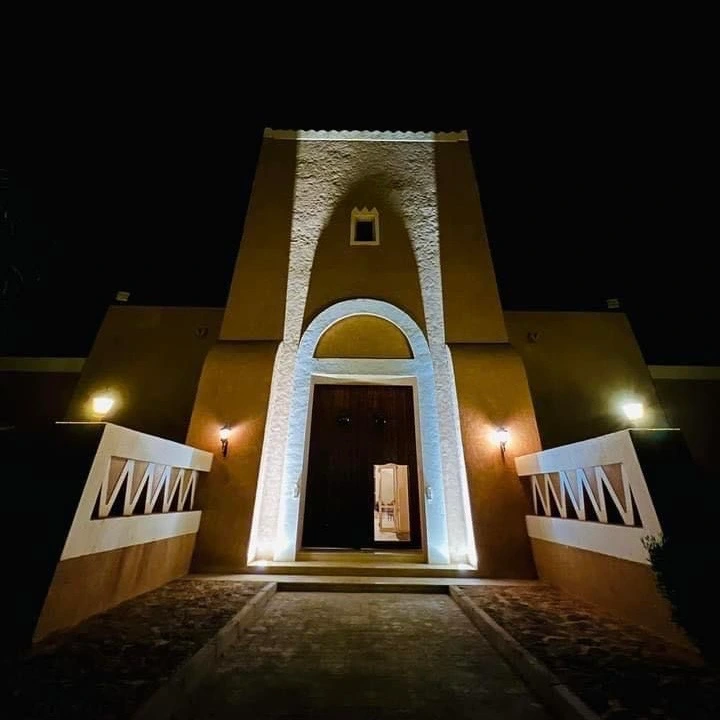
Arrive in Tripoli, Libya, in the afternoon. Depending on your arrival time, begin your Libya journey with a short walking tour through modern Tripoli, offering an introduction to the capital city, its streets, architecture and contemporary urban life.
After the walking tour, enjoy dinner before transferring to your hotel.
Overnight in Tripoli.

Excursion: Sabratha UNESCO World Heritage Site and Tripoli Old Town
Highlights: Sabratha Roman Theatre, Gorgi Mosque, Arch of Marcus Aurelius, Karamanli House
Meals: Breakfast, lunch and dinner
After an early breakfast, we depart from Tripoli for Sabratha, one of Libya’s most important archaeological sites and a UNESCO World Heritage Site. Originally founded as a Phoenician trading settlement in the 4th century BC, Sabratha later came under Greek influence before becoming part of the Roman world.
Explore the impressive ancient city, including its monumental Roman Theatre, temples, forums and remains of the ancient Mediterranean port. Sabratha offers a remarkable insight into Libya’s Phoenician, Greek and Roman heritage.
After returning to Tripoli, discover the historic heart of Libya’s capital on a walking tour of the Tripoli Medina. Visit the Gorgi Mosque, the Arch of Marcus Aurelius and the historic Karamanli House, while exploring the narrow streets and traditional architecture of the old city.
Tripoli, often known as the “White Bride of the Mediterranean,” combines centuries of Mediterranean, Ottoman and North African history within its historic walled city.
Dinner and overnight in Tripoli.


Excursions: Qasr al-Haj, Nalut and Ghadames
Highlights: Berber heritage, Qasr al-Haj, Nalut and the historic Berber granaries
Meals: Breakfast, lunch and dinner
Today we leave Tripoli and travel west into the spectacular Jabal Nafusa, the heartland of Libya’s Berber communities. The region is renowned for its dramatic mountain landscapes, traditional villages and distinctive Berber qasrs, fortified granaries that were historically used to store grain and other provisions.
Our first stop is Qasr al-Haj, one of Libya’s most remarkable examples of traditional Berber architecture. This imposing circular granary, dating back to the medieval period, features numerous storage chambers arranged around a central courtyard. Its distinctive design reflects the ingenuity of the Berber communities who lived in the Jabal Nafusa.
We continue towards Nalut, another important centre of Berber heritage. Here we visit the historic Qasr Nalut, an impressive fortified granary built on the edge of the Jabal Nafusa. The site offers fascinating insight into the traditional architecture, culture and history of western Libya.
From Nalut, we continue across the desert towards Ghadames, one of Libya’s most celebrated historic cities and a UNESCO World Heritage Site. Known as the “Jewel of the Sahara,” Ghadames is famous for its extraordinary traditional architecture, covered alleyways, whitewashed houses and centuries-old oasis culture.
We arrive in Ghadames, where we will stay for two nights and explore this remarkable Saharan city in greater depth.
Overnight in Ghadames


Excursions:
Ghadames Old Town UNESCO World Heritage Site, guided by a local Ghadames guide; 4×4 desert excursion to Ras al-Ghoul and the Grand Erg Oriental
Highlights:
Ghadames Old Town, traditional Ghadames house and lunch, Berber architecture, Ras al-Ghoul and the sand dunes of the Grand Erg Oriental
Meals: Breakfast, traditional lunch and dinner
Today we explore Ghadames Old Town, one of Libya’s most remarkable historic sites and a UNESCO World Heritage Site. Accompanied by a knowledgeable local Ghadames guide, we enter the old city through the historic Bab al-Burr gateway and discover its fascinating network of narrow streets, covered passages and traditional houses.
Ghadames is renowned for its distinctive desert architecture, designed to provide shade and ventilation in the extreme Saharan climate. The covered walkways, interconnected houses and whitewashed walls create a unique urban landscape that has developed over centuries around the oasis.
During our visit, we enjoy a traditional lunch in a local Ghadames house, providing an opportunity to experience the hospitality, cuisine and cultural traditions of this historic Saharan community.
Later in the afternoon, we leave the town by 4×4 vehicles for a short desert excursion towards Ras al-Ghoul, also known as the “Summit of the Ghost.” From here, we continue into the spectacular desert landscape and the dunes of the Grand Erg Oriental, the vast sand sea extending across the borders of Libya, Algeria and Tunisia.
As the sun begins to set, we stop among the dunes to enjoy the changing colours and expansive views of the Sahara.
We return to Ghadames in the evening.
Overnight in Ghadames.


Excursions: Kabaw, Tormisa and Gharyan
Highlights: Kabaw Qasr, abandoned village of Tormisa, Jabal Nafusa, traditional troglodyte house and Gharyan pottery
Meals: Breakfast, lunch and dinner
Today we leave Ghadames and travel east through the dramatic landscapes of the Jabal Nafusa, the historic heartland of Libya’s Berber communities.
Our first stop is Kabaw, where we visit its historic Berber qasr, a traditional fortified granary that reflects the distinctive architecture and agricultural traditions of the Jabal Nafusa. These historic qasrs were built to protect and store grain and other valuable provisions for local communities.
We continue through the mountains to Tormisa, an abandoned traditional village dramatically positioned on a rocky cliff. From the remains of the old settlement, there are impressive panoramic views across the surrounding valleys and mountains. The site provides a fascinating glimpse into the traditional settlement patterns of the Jabal Nafusa.
Our journey then continues to Gharyan, one of western Libya’s best-known centres of traditional pottery. Here we visit a traditional troglodyte house, built partly underground and adapted to the region’s hot climate. We also have time to see the local pottery workshops and stalls for which Gharyan is renowned.
From Gharyan, we continue our journey back to Tripoli.
Road distance: Approximately 570 km
Overnight in Tripoli.


Excursion: Tripoli Old City and Historic Medina
Highlights: National Museum of Libya, Gorgi Mosque, Arch of Marcus Aurelius, Karamanli House, Dragut Mosque, Tripoli souks and Ottoman architecture
Meals: Breakfast, lunch and diner
Today is dedicated to exploring Tripoli, the capital of Libya and one of the most historically significant cities on the Mediterranean coast. Known as the “White Bride of the Mediterranean,” Tripoli combines Roman, Ottoman, Islamic and Mediterranean heritage within its historic old city.
Our first stop of the day is visiting the National Museum of Libya. After we begin with a walking tour through the walled Medina of Tripoli, exploring its atmospheric streets, traditional souks and historic buildings. The souks are traditionally organised around different trades, offering an insight into the commercial life of the old city.
Among the highlights is the historic Karamanli House, an 18th-century residence associated with the Karamanli dynasty that ruled Tripoli during the Ottoman period. We also visit the Dragut Mosque, associated with the Ottoman admiral Dragut, and the Gorgi Mosque, an important example of Tripoli’s Ottoman-era Islamic architecture.
Our tour continues past the former British Consulate, the former Turkish prison, now used as a school, St. George’s Greek Orthodox Church, and the historic Ottoman Clock Tower.
One of the most important monuments in the old city is the Arch of Marcus Aurelius, dating from the 2nd century AD. Built during the Roman period when Tripoli was known as Oea, the arch is one of the most prominent surviving Roman monuments in modern Tripoli.
After lunch at a traditional restaurant in the old town, we continue exploring the Medina before returning to our hotel.
Overnight in Tripoli.

Excursion:
Leptis Magna UNESCO World Heritage Site, guided by a local Leptis Magna guide
Highlights:
Leptis Magna Roman Theatre, Amphitheatre, Hadrianic Baths, Imperial Forum and Market
Meals: Breakfast, lunch and dinner
Today we travel along Libya’s Mediterranean coast for a full-day excursion to Leptis Magna, one of the most spectacular archaeological sites in North Africa and a UNESCO World Heritage Site.
Founded as a Phoenician settlement and later developed under Greek and Roman rule, Leptis Magna reached its greatest prominence during the Roman period. The city is particularly associated with Emperor Septimius Severus, who was born in Leptis Magna and became Roman emperor in AD 193. During his reign, the city underwent an extensive programme of monumental development.
Accompanied by a knowledgeable local Leptis Magna guide, we explore the remarkably extensive ruins of this ancient Roman city. Highlights include the monumental Roman Theatre, the Amphitheatre, the impressive Hadrianic Baths, the Imperial Forum and the ancient Market.
Walking among the columns, arches, temples and public buildings provides a fascinating insight into daily life, architecture and political power in the Roman Empire, while also revealing the importance of Leptis Magna as a major Mediterranean trading centre.
After our visit, we return to Tripoli.
Road distance: Approximately 280 km

Excursions: National Museum of Libya, Benghazi Old City
Highlights: Red Castle, National Museum of Libya, Benghazi Old City and Souq al-Jareed
Meals: Breakfast, lunch and dinner
This morning we visit the National Museum of Libya, located inside the historic Red Castle in the heart of Tripoli. The museum provides an introduction to Libya’s long and diverse history, with collections covering prehistoric Libya, the Greek and Roman periods, Byzantine heritage, the Islamic era and Libya’s more recent cultural history.
The museum’s collections include archaeological artefacts, ancient sculptures and mosaics, Islamic objects, traditional costumes and exhibits illustrating the cultural heritage of Libya and its different regions.
After the museum visit, we take a domestic flight from Tripoli to Benghazi, Libya’s second-largest city and the historic centre of Cyrenaica.
Please note: Domestic flight schedules in Libya can change at short notice. If a flight is delayed, cancelled or rescheduled, we may need to adjust the itinerary accordingly. This can include travelling at a different time or, where necessary, on a different day.
Exploring Benghazi
Upon arrival in Benghazi, we begin exploring the historic centre of the city. Our walking tour takes us through Benghazi Old City and Souq al-Jareed, where we experience the atmosphere of one of Libya’s most important historic commercial districts.
Benghazi also played a central role in Libya’s modern history. During our city tour, we visit locations associated with the 2011 uprising, which began in Benghazi and became a defining moment in Libya’s recent history.
The city was subsequently heavily affected by years of armed conflict, and parts of the historic centre suffered extensive damage. Alongside surviving historic buildings and traditional streets, the remains of damaged structures provide a visible reminder of Benghazi’s recent past and its ongoing transformation.
Overnight in Benghazi.

Excursions: Tocra, Ptolemais (Tolmeita) and Qasr Libya
Highlights: Ancient Tocra, Ptolemais archaeological site, Colonnaded Palace, Underground Cisterns, Byzantine mosaics at Qasr Libya and the Green Mountains of Cyrenaica
Meals: Breakfast, lunch and dinner
Today we leave Benghazi and travel east along the Mediterranean coast through the historic landscapes of Cyrenaica, one of Libya’s most important regions for ancient Greek, Roman and Byzantine heritage.
Our first stop is Tocra (Tokra), located 70 km northeast of Benghazi. It’s an ancient coastal settlement traditionally associated with the Greek city of Cyrene. The archaeological remains reflect the long history of the site, which developed through Greek, Roman and Byzantine periods and continued to play a role during later Ottoman and Italian rule. It was founded around 510 BC, and was build using soft sandstone. Inside the walls you find Greek and Roman Columns and the excavated remains of Roman tombs cut into the rock wall of a sunken pit. The fort’s current structure dates from the Turkish and Italian eras. Outside the gates to the west a small archeological railway runs west to the eastern basilica, within which what remains of the main sanctuary, apse and baptistry are visible along with some ancient greek inscription. A small museum contains a site map of Tokra with some very interesting tomb artifacts.
We then continue to Ptolemais (Tolmeita), one of the most significant ancient Greco-Roman cities of Cyrenaica. Once an important administrative and commercial centre, Ptolemais contains a remarkable collection of archaeological remains. We explore the Villa of the Four Seasons, the Odeon Theatre, the ancient Agora, the Colonnaded Palace and the extraordinary underground cisterns. These vast water-storage chambers demonstrate the sophisticated engineering used to supply the ancient city with water. The sight is located 37km northeast along the coast from Tokra. It was founded in the 4th century BC and the excavated areas of the city mostly date from the 1st and 2nd centuries BC, when Tolmeita covered 3sq km and was a thriving Hellenistic city.
Our journey continues inland towards Qasr Libya, an important archaeological site and museum renowned for its exceptional collection of Byzantine mosaics. The museum houses around 50 mosaic panels depicting a fascinating variety of subjects, including animals, wildlife, river gods and mythological figures.
Among the collection is a particularly notable mosaic depicting the Pharos of Alexandria, the famous lighthouse of Alexandria and one of the Seven Wonders of the Ancient World.
After exploring Qasr Libya and its remarkable Byzantine mosaics, we continue through the spectacular landscapes of the Green Mountains of Cyrenaica towards the Cyrene area.
Overnight in Cyrene area.


Excursions: Ancient Cyrene, Apollonia and Temple of Zeus
Highlights: Temple of Zeus, Forum, Agora, Sanctuary of Apollo and Amphitheatre of Cyrene; Byzantine churches and seafront Greek Theatre of Apollonia; Ras al-Hilal and Al-Atrun
Meals: Breakfast, lunch and dinner
Today we explore Cyrene, one of the most important ancient Greek cities in North Africa and part of the UNESCO World Heritage Site of Archaeological Sites of Cyrene. Founded in the 6th century BC by Greek settlers from the island of Thera (modern Santorini), Cyrene developed into a major centre of Greek culture and trade before coming under Ptolemaic and later Roman rule.
Our exploration includes some of the city’s most impressive archaeological monuments, including the colossal Temple of Zeus, the ancient Agora, the Forum, the monumental passageway of Hermes and Hercules, and the hillside Necropolis, with thousands of ancient tombs carved into the surrounding rock.
We continue to the Sanctuary of Apollo, one of the most important religious complexes at Cyrene, where we see the Temple of Apollo and remains of the Roman Baths. Our visit concludes with the ancient Amphitheatre, dramatically positioned within the archaeological landscape.
We then travel down towards the Mediterranean coast to Apollonia, the ancient port of Cyrene. Once an important maritime centre, Apollonia preserves an exceptional combination of Greek, Roman and Byzantine remains. We explore the remains of Byzantine churches, Roman Baths, the ancient Palace and the beautifully situated Greek Theatre, overlooking a sheltered Mediterranean cove.
From Apollonia, we follow the scenic coastal road through the Green Mountains of Cyrenaica, one of eastern Libya’s most distinctive natural landscapes. Along the way, we visit the Byzantine remains at Ras al-Hilal and Al-Atrun, combining the region’s archaeological heritage with spectacular Mediterranean coastal scenery.
This full-day excursion brings together the Greek, Roman and Byzantine heritage of eastern Libya, from the monumental ruins of Cyrene to the coastal archaeology of Apollonia and the landscapes of the Green Mountains.


Excursions: Ras al-Hilal, Atrun
Highlights: Ras al-Hilal coastal cliffs, Byzantine basilicas of Al-Atrun, Mediterranean coastline, Slontah Temple and the Green Mountains of Cyrenaica
Meals: Breakfast, lunch and dinner
Today we leave Cyrene and follow the spectacular Mediterranean coastline through the Green Mountains of Cyrenaica, travelling east towards Tobruk.
Our first stop is Ras al-Hilal, a dramatic coastal area where the rugged Green Mountains meet the Mediterranean Sea. The coastline is characterised by steep cliffs, clear blue waters and spectacular panoramic views, making it one of the most scenic landscapes in eastern Libya. It is located in Cyrenaica 55 km to the north-east of Al Bayda.
We continue to Atrun, a small coastal settlement located between Ras al-Hilal and Derna. The area is known for its remarkable Byzantine basilicas, beautifully situated near the Mediterranean shore. The surviving remains, including architectural elements and marble decoration, provide an insight into the region’s importance during the Byzantine period. The Western Church stands on a bluff above the Mediterranean and must have been a spectacular place for worship. The walls of the Church are still intact. The sanctuary is strewn with marble pillars, some of which are marked with a carved crosses, snakes and other motifs. The Eastern Church is located over the hill about 150m to the East.
We continue east towards Tobruk, an important Mediterranean port city with a prominent role in Libya’s modern history and the Second World War.
Depending on the schedule we will start exploring Tobruk area.
The day’s journey combines the archaeological heritage of eastern Libya with dramatic Mediterranean scenery, from the coastal cliffs of Ras al-Hilal to the ancient remains of Slontah and the forested landscapes of the Green Mountains.
Overnight in Tobruk.


Excursions:
Al Burdi Bay, Al Burdi Harbour and Tobruk World War II sites
Highlights:
Al Burdi Bay, Tobruk Museum, Lady Be Good aircraft, Fig Tree Hospital, German War Memorial, Commonwealth War Cemetery, Ras Alawda Castle and World War II battlefields
Meals: Breakfast, lunch and dinner
Today we explore the Tobruk and Al Burdi area, discovering the Mediterranean landscapes and wartime history of eastern Libya.
We begin at Al Burdi Bay and Harbour, a scenic stretch of the Cyrenaican coast known for its clear Mediterranean waters, limestone cliffs and sheltered harbour. During World War II, the area formed part of the Italian defensive network in Cyrenaica and saw military action during the North African Campaign. Al Burdi bay was the site of a major Italian fortification, which was besieged and attacked by the British XXIII Corps during the North African Campaign.
We continue to Tobruk, a city whose name is closely associated with some of the most important campaigns of the Second World War in North Africa. We visit the Tobruk Museum and explore several historic locations connected with the wartime history of the city and surrounding region.
Among the day’s highlights is the Lady Be Good, the wreckage of an American B-24 Liberator bomber that disappeared during a bombing mission over Italy in April 1943 and was discovered in the Libyan desert many years later.
We also visit the Commonwealth War Cemetery, the English Cemetery, the German War Memorial and Fig Tree Hospital, a wartime medical facility associated with the treatment of wounded soldiers. We continue to Ras Alawda Castle, another historic site in the Tobruk area.
Later (if available), we leave the paved roads and head into the desert by 4×4 to explore locations associated with the major battles of the North African Campaign. The route includes the battlefields of Operation Crusader, as well as sites connected with Rommel’s Gazala Offensive, including Sidi Rezegh, Bir el Gubi, Bir Hacheim and the Knightsbridge Box.
Our final stop is Acroma Cemetery, set within the desert landscape and surrounded by the remains and traces of the historic battlefield.
This is a unique opportunity to experience the World War II history of Libya not only through museums and memorials, but also by visiting the actual desert landscapes where some of the North African Campaign’s major battles took place.
Overnight in Tobruk.


Excursion: Slontah Temple
Highlights: Slontah archaeological site, indigenous heritage of Cyrenaica, free time in Benghazi and last-minute shopping
Meals: Breakfast and lunch
Today we leave Tobruk and begin our journey back towards Benghazi, with one final archaeological visit along the way.
Our first excursion is to Slontah Temple, a small but significant ancient site in the Green Mountains of Cyrenaica. It’s important archaeological site associated with the indigenous cultures of ancient Cyrenaica. The site includes a small ancient temple and distinctive carved stone remains, offering a fascinating glimpse into the region’s pre-Greek cultural heritage. The city is located about 24km south of Al-Bayda. The purpose and exact date of the carvings remain uncertain, with some interpretations suggesting a possible funerary connection. Omar al Mukhtar was captured by the Italians close by Slontah.
After visiting Slontah, we continue to Benghazi. Depending on the agreed arrangements and available time we explore more of the city, visit local shops or purchase some last-minute souvenirs.
Overnight in Benghazi.