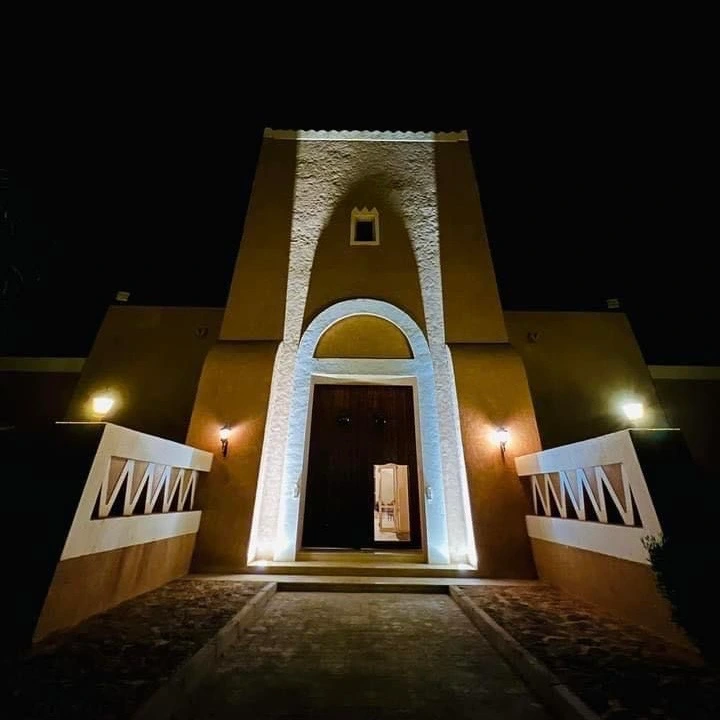
Arrive in Tripoli and transfer to your hotel. Enjoy a short walking tour of modern Tripoli with Italian influences, including Algeria Square with its impressive mosque (once a cathedral), and Martyrs’ Square, the lively heart, and central hub of the city.
Overnight in Tripoli.

Full day sightseeing in Libya’s capital city, known as the ”White Bride of the Mediterranean”. In the morning, we visit the wonderful National Museum which includes one of the finest collections of statuary and mosaics in the world. The walled old town of Tripoli encloses, arguably, the most charming medina in all of North Africa.
After lunch in an old town restaurant, we’ll explore the warren of streets and alleyways, including the bustling souks, each devoted to a different trade, the historic house of the 18th century governor Karamanli, the Karamanli Mosque, the 16th century Dragut Mosque, burial place of the famous pirate of that name, the 19th century Gorgi Mosque, the 18th century former British Consulate, the former Turkish Prison, now a school, St. George’s Orthodox Church, the 19th century Ottoman clock tower and the sole surviving building of Roman Oea, the 2nd century Arch of Marcus Aurelius.


A morning flight takes you from Tripoli to Libyas second city, Benghazi. In Benghazi we will have a city walk through the old town, souk al-Jareed and visit main attractions such as: the places where the uprising in 2011 started. Overnight in Benghazi.

From Benghazi we will continue by road to Tokra. This is one of the first ports settled from Cyrene, Inside the walls you find Greek and Roman Columns and the excavated remains of Roman tombs cut into the rock wall of a sunken pit. The fort’s current structure dates from the turkish and italian eras. Outside the gates to the west a small archeological railway runs west to the eastern basilica, within which what remains of the main sanctuary, apse and baptistry are visible along with some ancient greek inscription. A small museum contains a site map of Tokra with some very interesting tomb artifacts.
Afterwards we drive to the Greco-Roman city of Ptolemais. Sites include the Villa of the Four Seasons, the Odeon Theatre, Agora (market area), the Colonnaded Palace and the great underground Cisterns, once the largest in North Africa. There is also a fine museum which houses the Four Seasons mosaic taken from the villa on the main site and a number of statues and tablets. Overnight in Cyrene area.

Full day excursion to the magnificent Greek city of Cyrene, founded in the 6th century BC by immigrants from the Greek island of Thera. The city reached its zenith in the 4th century BC, was ruled by the Ptolemies from the 3rd century BC and fell under Roman rule in the 1st century CD. Two major earthquakes in the 3rd and 4th centuries AD sealed it fate.
Amongst the sites visited in Cyrene are the colossal Temple of Zeus, larger than the Parthenon in Athens, the hillside Necropolis containing over 2000 tombs, the Forum, the monumental passageway of Hermes and Hercules, House of the High Priest Jason Magnus, the House of the Christian Hesychius, the Agora (with its Tomb of Battus, Sanctuary of Demeter and Kore and Naval Monument), the Sanctuary of Apollo containing the Temple of Apollo and the Roman Baths, and the Amphitheatre. Overnight in Cyrene area.


The morning is devoted to ancient Apollonia, which remained the port of Cyrene for a thousand years. Here you will see the several Byzantine churches, the Roman baths, the Palace and arguably the most enchanting Greek theatre in the world, set in a picturesque cove. Afterwards, drive along the coastal road of the Green Mountains to the Byzantine churches at Ras al-Hilal and Al-Atrun. Overnight Cyrene area.

This day will start with a tour through the historical town of Tobruk. You will visit the centre museum and the lady Be Good Plane. Afterwards you will start exploring some of Tobruk’s numerous cemeteries such as: Â Commonwealth Cemetery, then after lunch, you will visit the English Cemetery, followed by a drive to the Fig Tree hospital. The Australian or the Fig Tree Hospital was used as a base to treat the wounded.
The name comes from the actual fig tree which still stands witness to this day, as shown in this photo. According to some reports, a cutting from the tree was taken to Australia, where it was planted at Melbourne’s Shrine of Remembrance by Tobruk veterans. Before returning to Tobruk’s city centre we will visit the Ras Alawda Castle. Overnight in Tobruk.

Today we drive out to the desert to examine Operation Crusader and Rommel’s Gazala offensive which led to the relief and the fall of Tobruk in 1941 and 1942 respectively. In 4x4s we will see where the Allies received a bloody nose at Sidi Rezegh and Bir el Gubi, before continuing to the southernmost ‘box’ of the Gazala Line at Bir Hacheim where will have a desert picnic amongst the evident remains of that valiant defence by the Free French. Carefully picking our way northwards along the line through the still dangerous minefields we will visit the Knightsbridge box and end our day within the confines of the Acroma cemetery. Afterwards we drive back to to Al-Bayad. Overnight in cyrene area.

From Cyrene, travel back through the Green Mountains to Slontah, site of a tiny, eerie pre-Islamic grotto with grotesque carvings; its use is in doubt but it may have been a funerary site.
Continue to Qasr Libya with its Byzantine church and museum housing one of the finest collections of mosaics in the country: 50 panels depicting river gods, nymphs and wildlife as well as a very rare depiction of the Pharos Lighthouse, one of the Seven Wonders of the World. Continue to Benghazi for the flight back to Tripoli. Overnight in Tripoli.

We leave Tripoli for the day, heading west along the coastal road to Janzour where we visit the Janzour Museum and go underground to see the catacombs with their tomb paintings.
We continue to the UNESCO World Heritage Site of Sabrata, originally founded in the 4th century BC. It later fell under Greek influence before Rome took hold in the 1st century AD. The most spectacular monument is the Theatre, featuring 108 Corinthian columns rising to a height of twenty metres above the stage. Below the stage you will see marble friezes depicting mythological figures including, inter alia, the Three Graces, the Judgement of Paris and the Nine Muses.
We also see the Punic Mausoleum of Bes, the Temple of Antoninus, the Temple of Zeus, the Court of Justice and the great Roman Forum. Overnight in Tripoli.


Today, we leave Tripoli and drive into the Berber heartland of the Jabal Nafusa. Our first stop will be at Qasr al-Haj to visit the most beautiful Berber granary qasr (castle) in Libya, and its no wonder that Dan Cruickshank chose this imposing 13th century fortress, circular in build, as one of The World80 Greatest Treasures in his recent BBC TV series.
We continue to Nalut to visit another Berber qasr situated on the edge of an escarpment. This impressive granary castle, with its narrow passageways, is of a different design to that of Qasr al-Haj. We continue to the UNESCO World Heritage Site of Ghadames, known as the Jewel of the Sahara, where we stay for two nights. Overnight in Ghadames.


Entering via the ancient gateway of Bab al-Burr, today we explore the labyrinthine streets and enclosed passages of Ghadames old town, once inhabited by the tribes of the Bani Wazid and the Bani Walid. Renowned for its distinctive architecture, we visit the various small squares, the old mosque and a madrasa (Koranic school), see the fruit and vegetable gardens and view the ancient system of irrigation. Lunch will be taken in a richly decorated traditional house in the age-old manner, sitting on the floor eating from commmunal dishes. We climb on to the roof of the house to see where the women, forbidden to wander the streets alone, would use the rooftops as a thoroughfare. We also visit Ghadames museum with its historical and ethnographic displays.
Later in the afternoon, we climb aboard four-wheel drive vehicles to visit Ras al-Ghoul (Summit of the Ghost), the remains of an ancient Roman fort before heading for the sand dunes of the Grand Erg Oriental, bordering the countries of Libya, Algeria and Tunisia to watch the sunset. Overnight in Ghadames.


Drive on tarmac from Sebha to Germa where we enter the desert for the drive to Wadi Matkhandoush, an ancient spiritual site festooned with rock engravings dating back thousands of years. Arrive in time for lunch before beginning exploration of the site. Afterwards, we camp on the edge of the mighty Murzuk Sand Sea. Accommodation: wild camping


Exploration of the Acacus, with its amazing vistas and superb rock paintings charting the evolution of human societies harking back 12000 years. The scenery, with its great basalt monoliths ladled among shifting sands, is awe-inpiring, particularly the great 150 metre high arch of Afizajarin. Accommodation: wild camping


Continue exploration of the Acacus. Drive via Wadi Adad and Finger Rockand exit to the town of Al-Awainat where we overnight. Accommodation: wild camping

From Al-Awainat, we drive north to Germa where we visit the ancient capital of the Garamantian civilisation before heading into the high dunes of the Ubari Sand Sea on an exhilirating ride to the great Ubari lakes of Lake Gabraoun and Lake Umm al-Maa. These beautiful oases are enchanting, and offer the opportunity for a refreshing swim in the salt waters followed by a dousing with freshwater from a well. Accommodation: wild camping


Continue visit to Ubari Sand Sea before driving to Sebha for flight to Tripoli. Overnight in Tripoli.

Full day excursion to Leptis Magna (UNESO World Heritage Site), the largest and best-preserved Roman city in the world that came to prominence in the 2nd century AD under its native son, the Emperor Septimus Severus. Following his reign, the city fell into decline until revived by the Emperor Justinian in the 5th century AD at which time it fell under Byzantine rule.
The vast site is truly spectacular and includes the triumphal Arch of Septimus Severus, the Hadrianic Baths complex, the Palaestra (Athletics Ground), the Nymphaeum (Temple of Nymphs), the huge Imperial Forum, the Basilica, the Arches of Tiberius and Trajan, the Theatre with its beautiful backdrop against the Mediterranean Sea, the Sanctuary of the Divine Emperors, and the Market with its unique kiosks which, at the time of construction, were a groundbreaking design in the Roman world. In the eastern part of the city lie the Circus and the vast Amphitheatre, the most complete in the world, with seating for over 15,000 spectators. You will visit the vast arena, the terraces, gladiators anterooms and animal enclosures.
En route back to Tripoli, a visit will be made to the 2nd century Villa Sileen discovered in 1974 The wall paintings portray scenes such as gladiatorial combat and chariot racing while the mosaics display river scenes that include sea nymphs, birds and animals. Overnight in Tripoli.

Enjoy your final day at leisure, with time for shopping, before your transfer to the airport.